

Limitless Potential of Data Ops and AI
Introduction
Traditional DataOps challenges
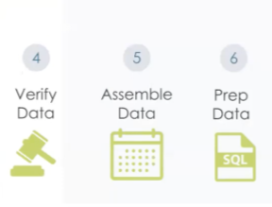
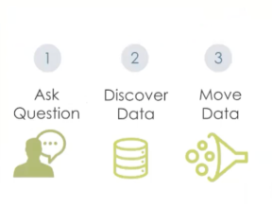
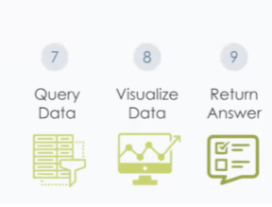
Inspironlabs, AI-Led DataOps Framework
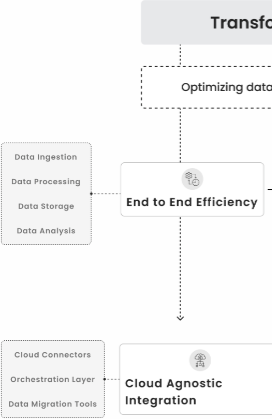
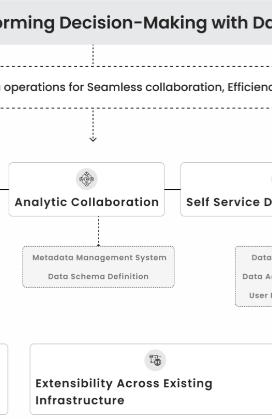
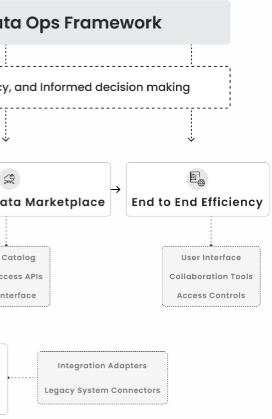
Our Services enabling you to take informed decisions at early stages
We efficiently manage testing environments with our AI enabled tools, enabling create, duplicate, and isolate sandbox environments for testing and validation. This ensure production environment stability during development and testing.
What makes us more reliable in DataOPs
Limitless Potential of Data Ops & AI with InspironLabs!
Author’s Profile

Sheetal Kadam • 17 April, 2026
Beyond Change Management: Building Organizational Agility for Continuous Transformation
Why Change is No Longer an Initiative—But a Core Business Capability
In today’s rapidly evolving business landscape, organizations can no longer afford to treat change as a one-time initiative.
Yet, many companies still approach change management as a structured project—starting with a kickoff, moving through defined phases, and concluding with a closure email. While this model worked in relatively stable environments, it no longer aligns with current realities.
Today, businesses operate in a state of:
- Continuous technological disruption
- Rapidly shifting customer expectations
- Evolving workforce dynamics
In this environment, success is no longer defined by how well change is managed—but by how effectively organizations build the capability to continuously adapt.
From Transformation to Continuous Adaptation
Traditional transformation models assume periods of stability between major initiatives. That assumption has fundamentally shifted.
Modern organizations must now:
- Adapt faster than market shifts
- Respond proactively to external signals
- Embed flexibility into their operating models
This requires moving beyond episodic transformation toward continuous adaptation—where change becomes part of the organization’s DNA rather than a reaction to disruption.
Adopting an Outside-In Mindset
One of the most critical shifts organizations must make is moving from an internal focus to an outside-in approach.
Instead of asking:
- “What internal process should we improve?”
High-performing organizations are asking:
- What is changing in our market?
- What do customers expect next?
- What capabilities do we need to remain competitive?
Anchoring decisions in external realities brings clarity, urgency, and alignment—ensuring that initiatives are driven by business value, not internal assumptions.
Agility Over Perfection
In fast-moving environments, speed often outweighs precision.
Organizations that succeed prioritize:
- Rapid experimentation
- Continuous learning
- Iterative improvement
Rather than over-engineering solutions, they focus on progress over perfection, enabling faster decision-making and reducing time-to-value.
Leadership: The Defining Factor in Organizational Change
Frameworks, tools, and communication plans play a supporting role—but leadership determines success.
Effective leaders:
- Create clarity in ambiguity
- Build trust through consistent actions
- Translate strategy into execution
- Reinforce behaviors aligned with business goals
Employees don’t follow strategies on paper—they follow what leaders consistently demonstrate and prioritize.
From Individual Talent to Organizational Capability
Many organizations invest heavily in hiring top talent but overlook a critical factor—the environment those individuals operate within.
Sustainable success depends on building organizational capabilities, such as:
- Cross-functional collaboration
- Execution accountability
- Innovation-driven thinking
- Learning agility
These are not just individual strengths—they are system-level capabilities embedded in culture, processes, and leadership behaviors.
The Evolving Role of HR in Driving Transformation
HR is no longer just a support function—it plays a central role in shaping organizational adaptability.
Modern HR functions are expected to:
- Align talent strategy with business objectives
- Design agile organizational structures
- Embed adaptability into performance frameworks
- Foster a culture that rewards innovation and responsiveness
In essence, HR becomes a strategic enabler of continuous transformation.
A Practical Framework for Driving Change
Before initiating any transformation effort, organizations must address three critical questions:
- Why does this matter?
(Business context and external drivers)
- What value will it create?
(Customer, financial, or strategic outcomes)
- How will it be sustained?
(Leadership alignment, culture, and systems)
Without clarity on these dimensions, even well-planned initiatives risk losing momentum.
Common Pitfalls That Limit Organizational Agility
Despite best intentions, many organizations struggle due to:
- Treating change as a one-time project
- Over-relying on communication without behavioral reinforcement
- Driving initiatives top-down without broader ownership
- Ignoring cultural alignment
- Measuring activity instead of business outcomes
Avoiding these pitfalls is essential to building a resilient and adaptive organization.
What Enables Sustainable Transformation
Organizations that successfully embed adaptability focus on:
- Consistent leadership behavior
- Clear linkage to measurable business outcomes
- Employee involvement and ownership
- Reinforcement through performance and reward systems
- Continuous feedback and improvement loops
These elements create a foundation for long-term, scalable transformation.
How InspironLabs Enables Continuous Organizational Transformation
At InspironLabs, we help drive scalable transformation by moving beyond traditional change management approaches.
Our approach focuses on:
- Aligning transformation initiatives with business outcomes and market dynamics
- Designing agile operating models and data-driven decision frameworks
- Embedding adaptability into leadership, culture, and processes
- Leveraging AI and digital technologies to accelerate transformation
The result is not just successful initiatives—but organizations that are equipped to continuously evolve, adapt, and lead in dynamic markets.
The Future Belongs to Adaptive Organizations
Organizations don’t struggle because they cannot initiate change—they struggle because they cannot sustain and scale it.
The real competitive advantage today lies in:
👉 The ability to continuously adapt
👉 The ability to respond faster than the market
👉 The ability to turn change into a repeatable capability
In a world defined by constant disruption, adaptability is no longer optional—it is essential.
Ready to Build a Future-Ready Organization?
If your organization is looking to move beyond one-time transformation and build a sustainable, adaptive operating model, now is the time to act.
👉 To know more, visit: https://inspironlabs.com/