


Limitless Potential of Data Ops and AI
Introduction
Traditional DataOps challenges
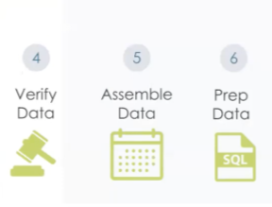
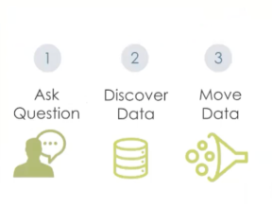
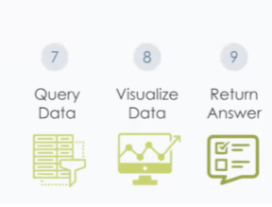
Inspironlabs, AI-Led DataOps Framework
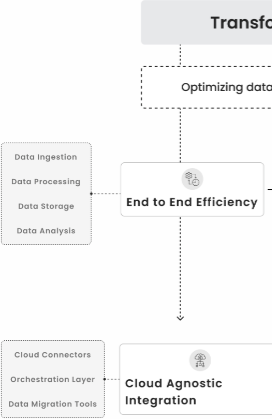
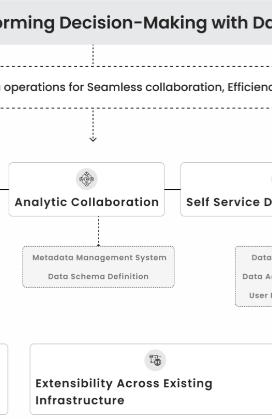
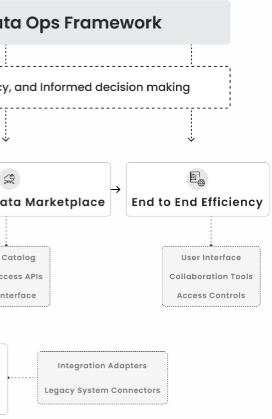
Our Services enabling you to take informed decisions at early stages
We efficiently manage testing environments with our AI enabled tools, enabling create, duplicate, and isolate sandbox environments for testing and validation. This ensure production environment stability during development and testing.
What makes us more reliable in DataOPs
Limitless Potential of Data Ops & AI with InspironLabs!
Author’s Profile

Kumar Kartikey • 26 June, 2026
The Rise of Agentic UX: Why Product Leaders Must Rethink Digital Experiences in the Age of AI
Introduction
For years, organizations have focused on improving user experiences through better interfaces, streamlined workflows, and personalization. But the emergence of Agentic AI is changing the very nature of how users interact with digital products.
Instead of navigating applications step by step, users are increasingly delegating goals to intelligent systems that can independently plan, execute, and optimize outcomes.
This shift represents more than a technological advancement—it signals a fundamental change in product strategy.
For product leaders, digital transformation executives, and innovation teams, the challenge is no longer building better interfaces. The challenge is designing experiences where humans and AI collaborate seamlessly while maintaining trust, transparency, and control.
The organizations that successfully embrace Agentic UX will create the next generation of intelligent products. Those that don’t risk delivering experiences that feel outdated in an increasingly AI-driven world.
Why Agentic UX Matters to Business Leaders
Many organizations view AI primarily as a tool for automation and productivity. However, its greatest potential lies in transforming user experiences.
Traditional software requires users to understand workflows, navigate interfaces, and manually complete tasks. Agentic systems take a different approach. Users simply define their objectives, while AI orchestrates the necessary actions and delivers the desired outcomes.
For business leaders, this shift reduces complexity, improves efficiency, and enables teams to focus on higher-value work rather than routine processes.
This evolution has significant implications for businesses:
➤ Accelerated Productivity
By automating routine activities and streamlining workflows, Agentic AI enables teams to focus on strategic priorities and business impact.
➤ Faster Decision-Making
AI agents can gather, analyze, and synthesize information across multiple systems, enabling quicker business decisions.
➤ Improved Customer Experience
Customers increasingly expect outcomes, not processes. Agentic experiences reduce friction and improve satisfaction.
➤ Higher Product Adoption
Intelligent experiences lower learning curves and increase user engagement.
➤ Competitive Differentiation
As AI capabilities become commoditized, experience design will become the primary differentiator between competing products.
The question is no longer whether organizations should adopt AI.
The question is whether their products and platforms are prepared for AI-driven interactions.
The Shift from User Interfaces to Intent Interfaces
Historically, product teams optimized navigation structures, workflows, and user journeys.
In an Agentic AI world, success depends on something entirely different: Understanding intent.
Rather than guiding users through a predefined sequence of actions, intelligent systems must understand:
- What users want to achieve
- Why they want to achieve it
- What constraints exist
- What outcomes define success
This marks the evolution from User Experience Design to Intent Experience Design.
Organizations that master intent-based interactions will be better positioned to scale AI adoption and deliver meaningful business outcomes.
Four Design Principles That Will Define Successful Agentic Products
As organizations scale AI adoption, success will depend not only on the intelligence of the system but also on how effectively users can trust, interact with, and collaborate with it. The following principles will define the next generation of Agentic products.
1. Visibility Creates Trust
When AI systems make autonomous decisions, transparency becomes a business requirement—not just a UX consideration.
Users need to understand what the AI is doing, why it is taking certain actions, and what outcomes it is working toward. Organizations that provide clear visibility into AI decision-making will drive higher adoption, stronger trust, and greater confidence in AI-powered experiences.
2. Human Control Must Scale with Risk
Not all AI actions carry the same level of impact.
While routine tasks can be fully automated, high-risk decisions should include human oversight and approval checkpoints. The most successful Agentic products balance automation with accountability, ensuring users remain in control when it matters most.
3. Intent Matters More Than Navigation
Traditional software is designed around workflows and menus. Agentic systems are designed around goals and outcomes.
Instead of guiding users through predefined paths, organizations must build experiences that can understand, refine, and execute user intent. As AI becomes more capable, understanding intent will become a greater competitive advantage than interface design alone.
4. Design for Continuous Collaboration
Agentic AI doesn’t stop working when users leave the application. It continues analyzing, executing, and optimizing tasks in the background.
Successful products make it easy for users to return, review progress, understand outcomes, and re-engage with the AI when needed. Designing for continuous human-AI collaboration will be critical for long-term adoption and trust.
What Leading Product Teams Are Doing Differently
As Agentic AI reshapes digital experiences, leading organizations are moving beyond AI experimentation and embedding intelligence into the core of their products.
➤ Designing AI-Native Experiences
Rather than treating AI as an additional feature, leading product teams are integrating AI into the user journey to simplify workflows, accelerate outcomes, and enhance decision-making.
➤ Defining Governance and Autonomy
Successful organizations establish clear guardrails that determine when AI can act independently and when human oversight is required, balancing efficiency with accountability.
➤ Building Trust by Design
Trust, transparency, and explainability are becoming essential product capabilities. Organizations that make AI actions understandable and predictable are more likely to drive adoption and long-term user confidence.
The Emergence of Agentic UX as a Strategic Business Function
Organizations investing in AI often focus heavily on models, infrastructure, and technology stacks. However, adoption failures rarely occur because of poor models.
They occur because users do not trust, understand, or effectively engage with the experience.
As AI becomes increasingly autonomous, UX will evolve from a design discipline into a strategic business capability that directly influences:
- Product adoption
- Employee productivity
- Customer retention
- Revenue growth
- Brand trust
- AI ROI
For digital leaders, Agentic UX is rapidly becoming a critical component of enterprise AI strategy.
How InspironLabs Helps Organizations Build AI-Native Experiences
At InspironLabs, we see Agentic UX as the convergence of AI strategy, intelligent automation, product engineering, and human-centered design.
Through our AI Labs, we help organizations design and build AI-powered experiences that balance autonomy with accountability, enabling businesses to accelerate adoption while maintaining user trust.
Our teams work with enterprises to:
- Design AI copilots and intelligent assistants
- Build agentic workflows and autonomous business processes
- Create explainable and transparent AI experiences
- Modernize digital products for AI-native interactions
- Validate adoption through user research and experience testing
As organizations move toward AI-first operating models, the ability to design intuitive, trustworthy, and outcome-driven experiences will become a key competitive differentiator.
Conclusion
The future of digital experiences will not be defined by better dashboards, cleaner interfaces, or additional features. It will be defined by how effectively organizations enable users to collaborate with intelligent systems.
Agentic AI is fundamentally changing how work gets done, how products create value, and how users interact with technology.
The organizations that invest today in designing transparent, trustworthy, and outcome-oriented AI experiences will be the ones that define the next generation of digital products.
Because in the age of Agentic AI, competitive advantage won’t come from having AI.
It will come from designing experiences people trust enough to use.
Design the Future of AI-Powered Experiences
As Agentic AI transforms digital products, organizations need experiences that balance autonomy, trust, and human oversight.
Partner with InspironLabs to build AI-native experiences that drive adoption and business impact.