





Limitless Potential of Data Ops and AI
Introduction

Traditional DataOps challenges
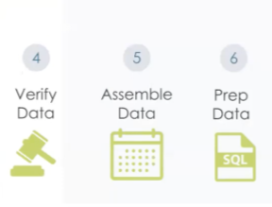
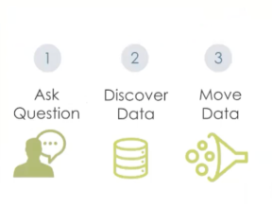
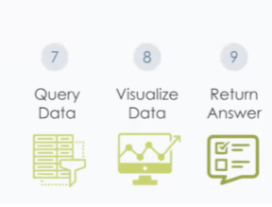
Inspironlabs, AI-Led DataOps Framework
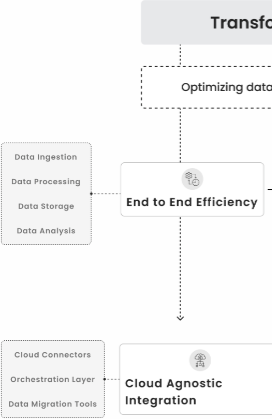
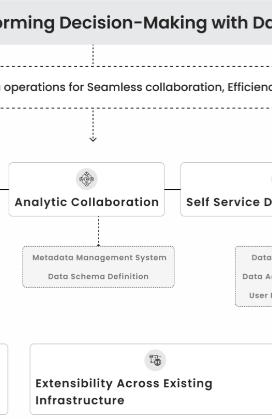
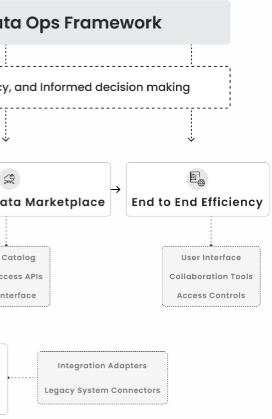
Our Services enabling you to take informed decisions at early stages
We efficiently manage testing environments with our AI enabled tools, enabling create, duplicate, and isolate sandbox environments for testing and validation. This ensure production environment stability during development and testing.
What makes us more reliable in DataOPs
Limitless Potential of Data Ops & AI with InspironLabs!
Author’s Profile

Shreyas Darade • 8 May, 2026
Why 80% of AI Initiatives Fail to Scale—and What Leading Enterprises Do Differently
Introduction
Artificial Intelligence is no longer a future ambition—it is actively shaping enterprise AI transformation strategies today. From predictive analytics to generative AI, organizations are rapidly investing in AI-driven digital transformation.
Yet, despite this surge, a consistent challenge remains:
Nearly 80% of AI initiatives fail to scale beyond pilot stages. This isn’t a technology problem—it’s an AI implementation challenge rooted in execution gaps.
At InspironLabs, through our work across AI strategy, data engineering, and enterprise AI adoption, we’ve observed that enterprises often succeed in proving AI concepts but struggle to translate them into sustained, enterprise-wide value. The difference lies in how AI is approached—not just built.
If you’re exploring how organizations move from experimentation to impact, the real shift lies in aligning strategy, data, and execution for scalable AI outcomes.



Why AI Initiatives Fail to Scale in Enterprises: The Scaling Gap
1. Treating Pilots as End Goals Instead of Starting Points
AI pilots are essential—they validate feasibility and generate early insights. However, many organizations unknowingly treat them as final outcomes rather than stepping stones toward scaling AI in enterprises. This creates a disconnect between experimentation and real-world deployment.
In many cases:
- Proofs of concept operate in controlled environments with limited data variability
- Integration with enterprise systems (ERP, CRM, legacy platforms) is not considered early
- Deployment complexities such as latency, security, and performance are ignored
As a result, when transitioning to production, organizations face unexpected friction.
Scaling requires designing pilots with enterprise AI deployment realities in mind from day one.
2. Underestimating Data Readiness and Complexity
While AI models often get the spotlight, data is the true enabler of scalable AI systems. Many enterprises assume their existing data ecosystems are sufficient—until they attempt to scale and encounter hidden inefficiencies and inconsistencies.
Common AI scaling challenges include:
- Siloed data across departments, making unified insights difficult
- Inconsistent data quality leading to unreliable model outputs
- Lack of real-time or near-real-time data pipelines
Additionally, many organizations underestimate the effort required for:
- Data cleaning and standardization
- Metadata management
- Continuous data validation
Without strong data readiness for AI, even the most advanced AI models fail to deliver consistent results at scale.
3. Weak Alignment with Business Outcomes
AI initiatives often begin with enthusiasm around innovation, but without grounding in business priorities, they struggle to sustain momentum. When AI is not directly tied to measurable outcomes, it becomes difficult to justify continued investment in enterprise AI initiatives.
This leads to:
- Undefined or ambiguous success metrics
- Difficulty in demonstrating ROI to leadership
- Limited stakeholder ownership
In contrast, scalable AI initiatives are tightly linked to:
- Revenue growth
- Cost optimization
- Operational efficiency
- Customer experience improvements
Clear alignment ensures AI is not just implemented—but valued and sustained as part of AI transformation strategy.
4. Ignoring Organizational and Process Readiness
Even the most sophisticated AI solutions can fail if the organization is not ready to adopt them. Scaling AI requires changes not just in systems, but in how teams collaborate, make decisions, and execute processes.
Typical AI adoption challenges include:
- Lack of collaboration between data science, IT, and business teams
- Limited understanding of AI among decision-makers
- Resistance to adopting AI-driven recommendations
Moreover, existing workflows are often not redesigned to incorporate AI insights, leading to underutilization.
Successful scaling requires:
- Redefining processes
- Enabling cross-functional teams
- Embedding AI into everyday decision-making
5. Delayed Focus on Governance, Risk, and Trust
As AI systems move closer to influencing critical business decisions, trust becomes a central concern. However, many organizations postpone governance discussions until late stages—creating friction when scaling machine learning models becomes a priority.
Challenges include:
- Lack of model explainability for stakeholders
- Unclear accountability for AI-driven decisions
- Compliance risks related to data privacy and security
Without proactive AI governance and compliance, scaling efforts slow down due to internal resistance and regulatory concerns.
What Leading Enterprises Do Differently to Scale AI Successfully
1. They Build AI as a Core Business Capability
Organizations that successfully scale AI take a fundamentally different approach—they do not treat AI as isolated experiments but as a core capability embedded within the business. This shift enables consistency, reuse, and long-term value creation in enterprise AI transformation.
They focus on:
- Creating reusable AI frameworks and accelerators
- Establishing centralized AI platforms
- Aligning AI investments with strategic business priorities
2. They Prioritize Data Modernization Early
Leading enterprises understand that AI success is directly proportional to data maturity. Instead of retrofitting infrastructure later, they invest early in building scalable and governed data ecosystems to support scalable AI deployment.
They invest in:
- Unified data ecosystems (data lakes, lakehouses, modern warehouses)
- Scalable data pipelines for continuous data flow
- Strong governance models ensuring data quality and accessibility
3. They Take a Value-First Approach to AI Use Cases
Rather than spreading efforts thin across multiple experiments, successful organizations focus on solving high-impact problems. This disciplined approach ensures that AI investments translate into tangible business outcomes and accelerate AI adoption in enterprises.
They:
- Identify areas with clear business value
- Define measurable KPIs before development
- Scale successful use cases systematically across functions
4. They Operationalize AI Through MLOps and Continuous Monitoring
Deploying an AI model is only the beginning. Leading enterprises recognize that maintaining performance and reliability requires continuous oversight and structured operations using MLOps in enterprise AI.
They implement:
- Automated pipelines for model training, testing, and deployment
- Real-time monitoring for model performance and drift
- Feedback loops to continuously improve model accuracy
This operational discipline ensures scaling machine learning models effectively over time.
5. They Invest in People and AI Culture
AI transformation is not purely technological—it is deeply human. Organizations that scale AI successfully prioritize building a culture where AI is understood, trusted, and actively used in decision-making—critical for enterprise AI adoption.
They:
- Upskill teams in AI literacy and data-driven decision-making
- Encourage collaboration between business and technical teams
- Foster a culture where AI insights are trusted and acted upon
6. They Embed Responsible AI Practices from the Beginning
Trust is a critical enabler for scaling AI, especially in enterprise environments where decisions have wide-reaching impact. Leading organizations integrate responsible AI practices early rather than treating them as an afterthought.
They:
- Build transparency into AI models
- Ensure fairness and reduce bias in decision-making
- Establish clear accountability frameworks
Responsible AI is essential for sustainable AI scaling in enterprises.
Bridging the Gap: From AI Experiments to Enterprise Value
Scaling AI requires a shift in perspective:
- From isolated pilots to integrated ecosystems
- From technical success to measurable business impact
- From short-term wins to long-term capability building
Enterprises that succeed do not rush AI—they structure it thoughtfully as part of a broader AI transformation strategy.
At InspironLabs, we see organizations achieving meaningful AI outcomes when they align strategy, data, technology, and people—not in isolation, but as a connected system.
Final Thoughts
The reality that most AI initiatives fail to scale is not a limitation of AI—it’s a reflection of fragmented approaches.
The organizations that are getting it right are not necessarily the ones with the most advanced models, but the ones with:
- Clear strategic alignment
- Strong data foundations
- Operational discipline
- Organizational readiness
Scaling AI is less about chasing innovation—and more about building scalable AI systems the right way.
A Practical Next Step
If your organization is currently running AI pilots—or planning to scale existing initiatives—it may be worth assessing your AI scaling challenges:
- Are your AI efforts aligned with measurable business outcomes?
- Is your data readiness for AI strong enough for scale?
- Do your teams and processes support AI-driven decision-making?
At InspironLabs, we work closely with enterprises to bridge the gap between AI experimentation and real business impact—through a balanced approach across strategy, data, engineering, and adoption.
If you’re exploring how to move from isolated AI initiatives to scalable, enterprise-wide transformation, this could be a good starting point for a deeper conversation.
👉 To know more, visit: https://inspironlabs.com/ai-labs/