

Limitless Potential of Data Ops and AI
Introduction
Traditional DataOps challenges
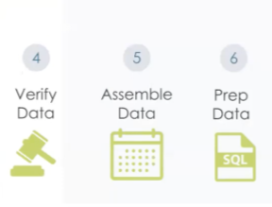
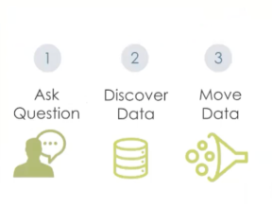
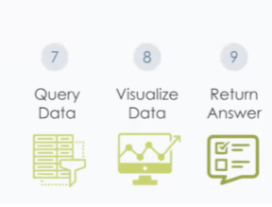
Inspironlabs, AI-Led DataOps Framework
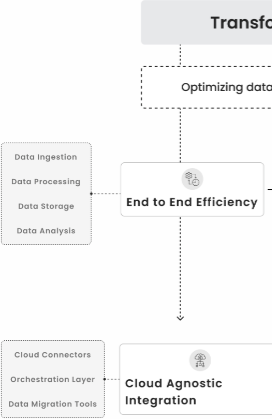
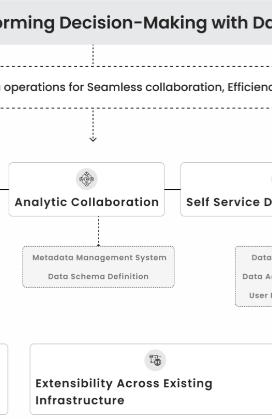
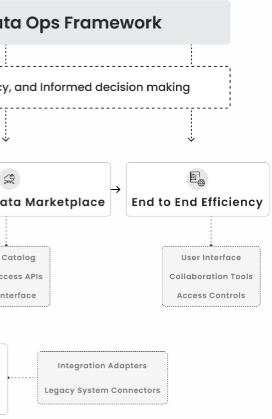
Our Services enabling you to take informed decisions at early stages
We efficiently manage testing environments with our AI enabled tools, enabling create, duplicate, and isolate sandbox environments for testing and validation. This ensure production environment stability during development and testing.
What makes us more reliable in DataOPs
Limitless Potential of Data Ops & AI with InspironLabs!
Author’s Profile

Khasimsaida Shaik • 16 July, 2026
Project Delivery in the AI Era: What Every Enterprise Should Know
Artificial Intelligence is fundamentally transforming how enterprise software is planned, built, tested, and delivered. Activities that once required weeks—from preparing Statements of Work (SOWs) and documenting requirements to creating user stories, UX designs, writing code, and generating test cases—can now be completed in a matter of hours.
For enterprises, this acceleration is more than just a productivity gain. It enables faster innovation, shorter release cycles, and the ability to modernize applications at scale. As organizations embrace AI across the Software Development Life Cycle (SDLC), engineering teams are finding new ways to improve efficiency while delivering greater business value.
However, scaling AI successfully requires more than adopting the latest tools.
As enterprises integrate multiple AI systems into their delivery processes, a new challenge is beginning to emerge—one that has less to do with AI capabilities and more to do with maintaining business context throughout the software delivery lifecycle.
At InspironLabs, we believe the future of enterprise AI isn’t defined by how many AI tools an organization adopts. It’s defined by how intelligently those tools collaborate, share context, and remain aligned with business objectives from discovery through deployment.
The New Reality of AI-Powered Project Delivery
Modern software delivery has evolved far beyond traditional development workflows.
Today’s enterprise teams increasingly collaborate with multiple AI assistants and Agentic AI systems across every stage of the SDLC. Rather than relying on a single AI model, organizations are using specialized AI capabilities to accelerate planning, engineering, testing, documentation, and release management.
A typical AI-powered delivery workflow may include:
➣ Business Discovery & Planning
- Capturing stakeholder conversations
- Generating Statements of Work (SOWs)
- Summarizing business requirements
- Identifying risks and dependencies
➣ Requirements Engineering
- Converting business requirements into epics and user stories
- Recommending acceptance criteria
- Prioritizing product backlogs
- Identifying functional gaps
➣ Design & User Experience
- Creating UX wireframes and interface concepts
- Generating user journeys
- Accelerating design iterations
- Recommending accessibility improvements
➣ Software Engineering
- Generating application code
- Assisting with code reviews and refactoring
- Recommending architectural improvements
- Accelerating API development
➣ Quality Engineering
- Generating automated test cases
- Identifying edge-case scenarios
- Supporting regression testing
- Assisting with defect analysis
➣ Documentation & Release
- Preparing technical documentation
- Creating release notes
- Generating user guides
- Supporting deployment readiness
Individually, each AI system performs exceptionally well within its area of expertise. Together, they can transform enterprise software delivery. However, as AI systems collaborate across the delivery lifecycle, subtle interpretation changes can occur. While each output may be technically accurate, the original business intent can gradually drift. The challenge isn’t AI itself it’s ensuring every AI system shares the same business context and objectives.
Key Insights:
Al doesn’t create delivery challenges-Disconnected Al workflows do.
Enterprise Al delivers its greatest value when every Al system shares the same business context, governance framework, and engineering objectives.
Where Context Drift Begins
One of the biggest challenges in AI-powered software delivery is maintaining consistent business context across every stage of the project. As multiple AI systems contribute to requirements, design, development, testing, and documentation, subtle interpretation changes can occur. Even when each AI-generated output is technically accurate, the original business intent can gradually drift.
Common signs of context drift include:
- Requirements that no longer align with the approved Statement of Work (SOW)
- User stories introducing assumptions that were never discussed
- UX designs diverging from intended business workflows
- Features meeting technical requirements but missing business objectives
- Test cases validating implementation instead of expected outcomes
- Documentation reflecting system behavior rather than customer expectations
The challenge isn’t AI—it’s ensuring every AI-assisted decision remains connected to the original business intent. Without shared context, organizations risk spending more time aligning AI-generated outputs than delivering business value.
Why This Matters to Enterprise Leaders
This shift is more than an operational challenge—it has become a strategic priority for enterprises scaling AI adoption.
As AI adoption expands across engineering functions, maintaining alignment between business strategy and execution becomes increasingly complex. Without a connected delivery approach, organizations risk creating inconsistencies that impact quality, compliance, customer experience, and delivery timelines.
The enterprises that gain the greatest value from AI won’t necessarily be those using the most AI tools. They’ll be the ones that establish a connected engineering ecosystem where every AI-assisted decision remains traceable, governed, and aligned with the original business intent.
A Practical Enterprise Scenario
Imagine a financial institution modernizing its customer onboarding platform using AI across the delivery lifecycle.
The project begins with an AI assistant summarizing stakeholder workshops and generating the initial Statement of Work (SOW). Another AI translates those requirements into epics, features, and user stories. A design assistant creates UX wireframes, while development agents generate application code and automated test cases.
At every stage, the outputs appear accurate.
However, a subtle compliance assumption introduced during the discovery phase is interpreted differently by subsequent AI systems. The UX aligns with the user stories, the code aligns with the UX, and the test cases validate the implemented functionality—but the final solution no longer fully reflects the original regulatory intent.
The issue isn’t poor AI performance.
It’s the absence of a shared business context across the entire delivery lifecycle.
Correcting this kind of misalignment late in the project often requires redesign, redevelopment, retesting, and delayed releases—costing significantly more than preventing it in the first place.
The Evolving Role of Project Managers
As AI becomes an integral part of software delivery, the role of the Project Manager is evolving beyond coordinating timelines and resources.
Today’s delivery leaders are increasingly becoming context managers, responsible for ensuring that business intent remains consistent throughout every AI-assisted handoff.
Their responsibilities now extend to:
- Validating AI-generated requirements and business artifacts.
- Reconciling inconsistencies across user stories, designs, code, and documentation.
- Maintaining end-to-end traceability throughout the SDLC.
- Ensuring AI-generated outputs remain aligned with stakeholder expectations.
- Strengthening governance and quality across AI-enabled delivery processes.
Key Insights:
The future of project management isn’t about managing more tasks-it’s about managing context, governance, and alignment across humans and Al.
The Missing Piece: A Connected AI Delivery Ecosystem
As AI becomes an integral part of enterprise software delivery, success depends on more than accelerating individual tasks. Organizations need a delivery ecosystem that keeps business context, engineering decisions, and AI-generated outputs continuously aligned throughout the Software Development Life Cycle (SDLC).
A future-ready AI Delivery Ecosystem should include:
- A Single Source of Truth
Ensure every AI system references the same business goals, requirements, and project context.
- Context Continuity
Preserve business intent consistently from discovery through deployment.
- End-to-End Traceability
Connect every requirement, design decision, code change, and test case back to the original business objective.
- Shared Business Knowledge
Enable AI agents to understand common terminology, business rules, and domain-specific knowledge.
- Continuous Synchronization
Keep requirements, designs, development, and testing aligned as projects evolve.
- Built-in AI Governance
Strengthen transparency, compliance, accountability, and quality across every stage of software delivery.
When these capabilities work together, AI becomes more than a productivity tool—it becomes a trusted engineering partner.
The InspironLabs Perspective
At InspironLabs, our AI-First DNA™ is built on a simple belief:
AI should strengthen engineering excellence—not create disconnected automation.
We see the future of enterprise software delivery as an ecosystem where humans, AI agents, engineering teams, and business stakeholders collaborate through shared context, intelligent orchestration, and responsible AI governance.
This is why we focus on engineering connected AI solutions that enable organizations to:
- Accelerate software delivery without compromising business intent.
- Scale AI adoption with confidence and governance.
- Improve collaboration across business and technology teams.
- Build resilient, future-ready digital products.
- Turn AI-driven innovation into measurable business outcomes.
For us, enterprise AI isn’t about automating individual tasks it’s about engineering intelligent systems that create lasting business value.
Ready to Build AI-Powered Software Delivery with Confidence?
At InspironLabs, we help enterprises transform software delivery through AI Engineering, Agentic AI, cloud-native development, and intelligent digital modernization.
Whether you’re modernizing legacy applications, scaling AI across engineering teams, or building next-generation digital products, our AI-First DNA™ enables connected, governed, and future-ready software delivery.
Ready to transform your software delivery with AI?
Contact us to connect with our experts and explore how InspironLabs can help accelerate your AI journey.
👉 Explore more insights at InspironLabs