



Limitless Potential of Data Ops and AI
Introduction

Traditional DataOps challenges
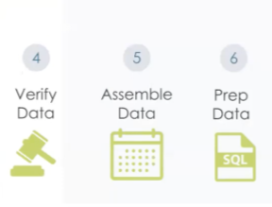
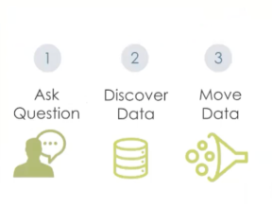
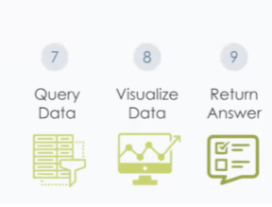
Inspironlabs, AI-Led DataOps Framework
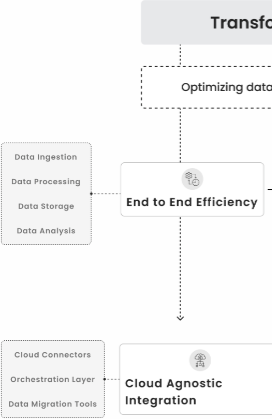
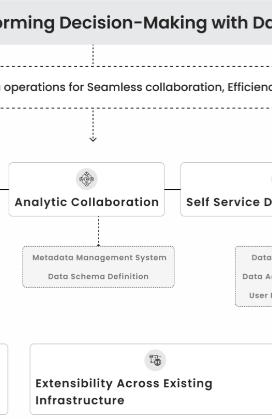
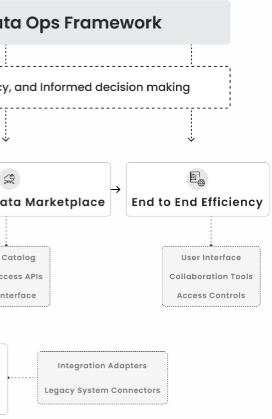
Our Services enabling you to take informed decisions at early stages
We efficiently manage testing environments with our AI enabled tools, enabling create, duplicate, and isolate sandbox environments for testing and validation. This ensure production environment stability during development and testing.
What makes us more reliable in DataOPs
Limitless Potential of Data Ops & AI with InspironLabs!
Author’s Profile

Bhavana Rathod • 31 July, 2026
Testing AI Applications: Building Trust in Enterprise AI Systems
Why Testing AI Is Different
Traditional software follows deterministic rules — given the same input, it should produce the same output every time. AI applications do not always behave that way. A customer-support chatbot may respond differently to similar questions. A recommendation engine may evolve as it learns from new data. A document-processing model may perform well on one dataset and poorly on another.
This variability is what makes AI powerful and what makes testing AI fundamentally different from testing conventional software.
Organizations are rapidly adopting AI for customer service, healthcare, finance, manufacturing, and enterprise operations. Yet many teams discover that their existing QA processes are not designed to validate accuracy, fairness, reliability, and safety in intelligent systems.
Testing AI applications is no longer just about finding bugs. It is about building trust.
As enterprises accelerate the adoption of Generative AI, Large Language Models (LLMs), and autonomous AI capabilities, the need for structured AI application testing has become increasingly important. Modern AI systems require continuous validation across accuracy, safety, security, reliability, and governance to ensure they consistently deliver trusted business outcomes throughout the AI lifecycle.


The Hidden Risks of Untested AI
When AI systems are insufficiently tested, the consequences extend beyond software defects.
Examples include:
- A chatbot providing incorrect policy information to customers.
- A fraud-detection model blocking legitimate transactions.
- A healthcare AI missing critical cases due to biased training data.
- A recommendation engine producing inappropriate or misleading content.
- An AI assistant hallucinating facts and presenting them as truth.
- A customer-support agent caving to social pressure and issuing unauthorized refunds.
- A document processor leaking sensitive data through prompt injection attacks.
Unlike traditional defects, these failures can damage customer trust, regulatory compliance, brand reputation, and business outcomes. And in the era of the EU AI Act and evolving global regulations, unvalidated AI is no longer just a quality problem — it is a compliance risk.
What Makes AI Testing Challenging?
AI applications introduce testing dimensions that do not exist in conventional software.
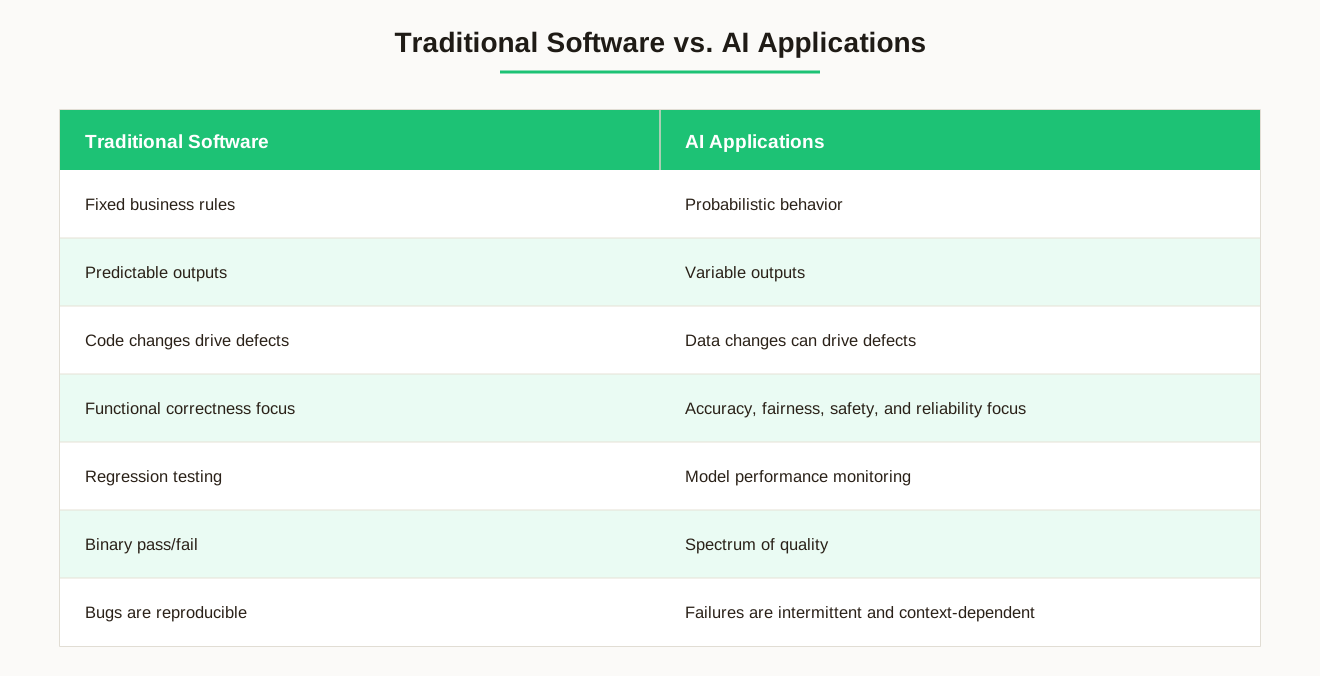
The same question asked twice to an LLM-powered system may produce different answers both potentially valid, one subtly wrong. Standard unit tests and regression frameworks have no mechanism to evaluate semantic correctness, factual accuracy, or contextual relevance.
The Trust Gap
There is a growing gap between what AI systems can do and how much organizations actually trust them at scale. This gap exists because:
1. Non-determinism — Identical inputs yield varied outputs across invocations.
2. Hallucinations — Models generate confident, plausible, but factually incorrect responses.
3. Context drift — Models behave differently as conversation context grows or user behavior changes.
4. Adversarial fragility — Small input variations can produce wildly different outputs.
5. Black-box reasoning — It is difficult to explain why the system produced a particular output.
6. Data dependency — Model quality is only as good as the data it was trained and evaluated on.
Trust is only built when AI systems are subject to continuous quality controls not just a one-off check before deployment.
The Five Pillars of AI Application Testing
1. Functional Testing
AI applications must still perform their core business workflows correctly.
Validate:
- Login and authentication flows
- API integrations
- Data persistence
- Workflow completion
- Error handling
Example: An AI-powered loan application must still correctly submit, store, and track applications even if the AI scoring model is separate. The “AI” layer does not excuse poor engineering in the surrounding system.
2. Model Accuracy Testing
This measures whether the AI produces correct results against known ground truth.
Key metrics:
- Accuracy
- Precision
- Recall
- F1-score
- BLEU / ROUGE (for language tasks)
- Groundedness (for retrieval-augmented systems)
Example: A document-classification model was tested against 50,000 historical records before production deployment, improving classification accuracy from 82% to 96%.
For LLM-based systems, accuracy testing shifts from exact-match to property-based evaluation: Is the answer grounded in source material? Is it safe? Does it refuse when it should? Is it within latency budget?
Modern LLM Evaluation
For modern LLM-powered and Generative AI applications, evaluating outputs extends beyond traditional accuracy metrics. Organizations increasingly assess response groundedness, factual consistency, relevance, safety, hallucination resistance, and policy compliance to determine whether AI-generated responses can be trusted in production environments. These evaluation practices form the foundation of modern AI model evaluation strategies.
3. Bias and Fairness Testing
AI systems can unintentionally favor or disadvantage certain groups based on the data they were trained on.
Testing includes:
- Demographic parity checks
- False-positive rate comparison across groups
- False-negative rate comparison across groups
- Dataset representation analysis
- Parallel queries with different demographic indicators
Example: A recruitment AI was found to score candidates differently across demographic groups. Fairness testing identified the issue before public rollout, preventing both reputational damage and legal exposure.
4. Robustness and Adversarial Testing
AI models must handle unexpected, malicious, and edge-case inputs gracefully.
Test scenarios:
- Misspellings and incomplete sentences
- Noisy or malformed data
- Unusual formats and multilingual input
- Adversarial prompts and prompt injection attacks
- Social engineering attempts (persuasion, urgency tactics)
- Boundary-pushing queries that test policy enforcement
- Extremely long or empty inputs
Example: A customer-support chatbot was stress-tested with thousands of malformed queries and adversarial prompts to ensure it responded safely instead of generating misleading answers or leaking internal system information.
Enterprise AI systems should also be validated against jailbreak attempts, retrieval manipulation, sensitive data exposure, and unauthorized tool execution to strengthen AI security and operational resilience.
5. Explainability and Safety Testing
In regulated industries — healthcare, finance, legal — teams must understand why the AI made a decision and ensure it operates within defined safety boundaries.
Validate:
- Decision explanations
- Confidence scores
- Audit trails
- Safety guardrails and content filtering
- Human escalation triggers
- Refusal behavior for out-of-scope requests
Example: A healthcare AI included confidence thresholds so low-confidence predictions were automatically routed to human reviewers, ensuring no critical diagnosis relied solely on AI judgment.
The AI Testing Pyramid
A modern AI testing strategy borrows from the classic test pyramid but adapts it for probabilistic systems:
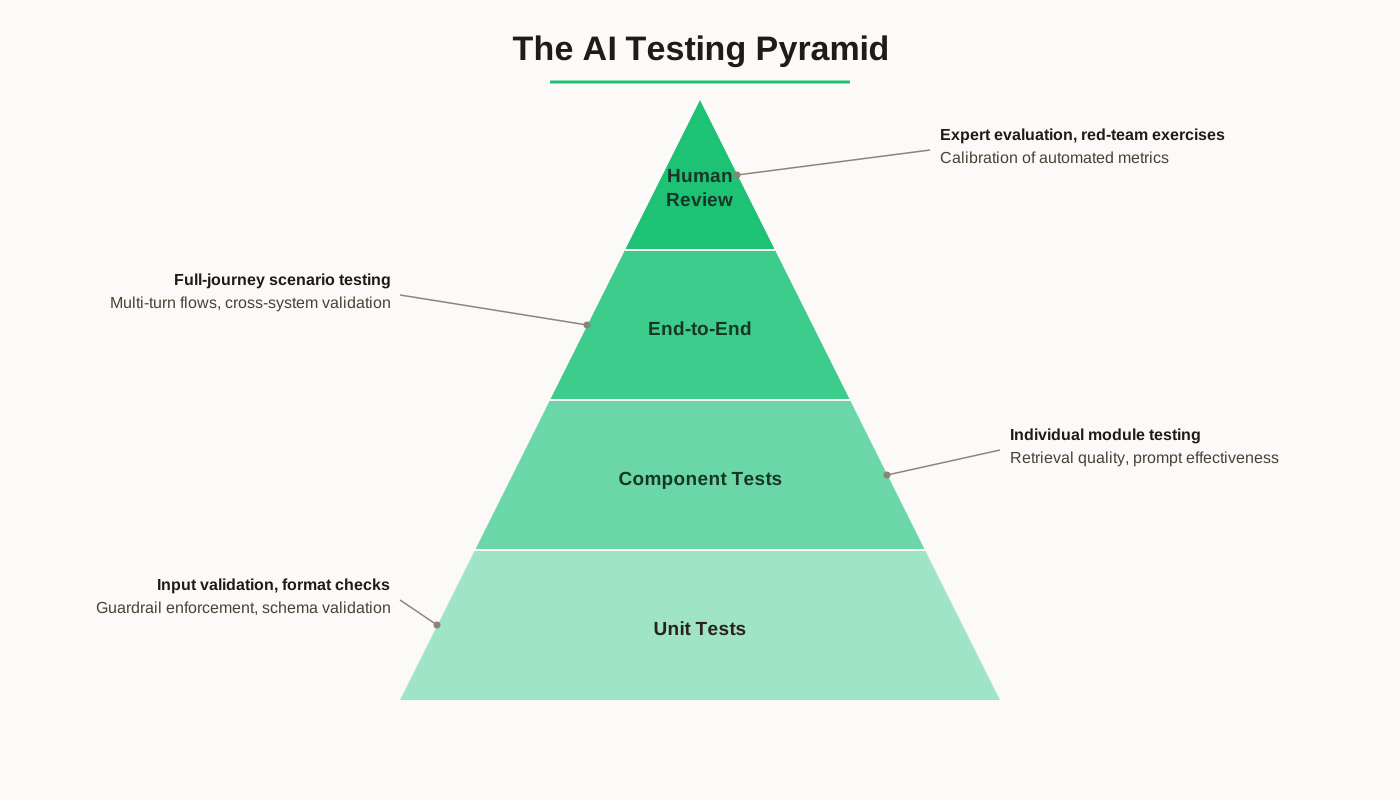
The key insight: human review does not scale, but it anchors truth. Use automated evaluation at the base of the pyramid, and human expert review at the top to calibrate and validate your automated metrics.
Best Practices for Testing AI Applications
Start with Data Quality
Poor data produces poor AI. Test datasets for completeness, accuracy, duplication, and bias before model training begins. Data quality is the single highest-leverage investment in AI reliability.
Create Versioned Test Datasets
AI testing should use stable benchmark datasets so model performance can be compared across releases. Without version control on evaluation data, you cannot tell if performance changed because of the model or the test.
Monitor Drift Continuously
Models can degrade over time as user behavior changes, new data patterns emerge, or the world simply moves on. Continuous monitoring is essential after deployment, not optional.
Keep Humans in the Loop
AI should augment human decision-making in high-risk scenarios rather than replace it completely. Always provide a path to a human when AI confidence is low or the stakes are high.
Test for Security and Prompt Injection
Generative AI applications require additional testing for prompt injection, data leakage, unauthorized information retrieval, and jailbreak attempts. This is the new attack surface.
Integrate AI Testing into CI/CD
Run AI validation on every model update. Treat model deployments with the same rigor as code deployments — version them, test them, roll them back when they fail.
Test the Reasoning, Not Just the Answer
For agentic AI systems, testing should account for whether reasoning paths and intermediate outputs were appropriate, not just whether the final answer was correct.
As organizations increasingly adopt autonomous AI agents, testing should also validate agent planning, reasoning consistency, tool usage, memory, and multi-step decision execution to ensure predictable and trustworthy outcomes.
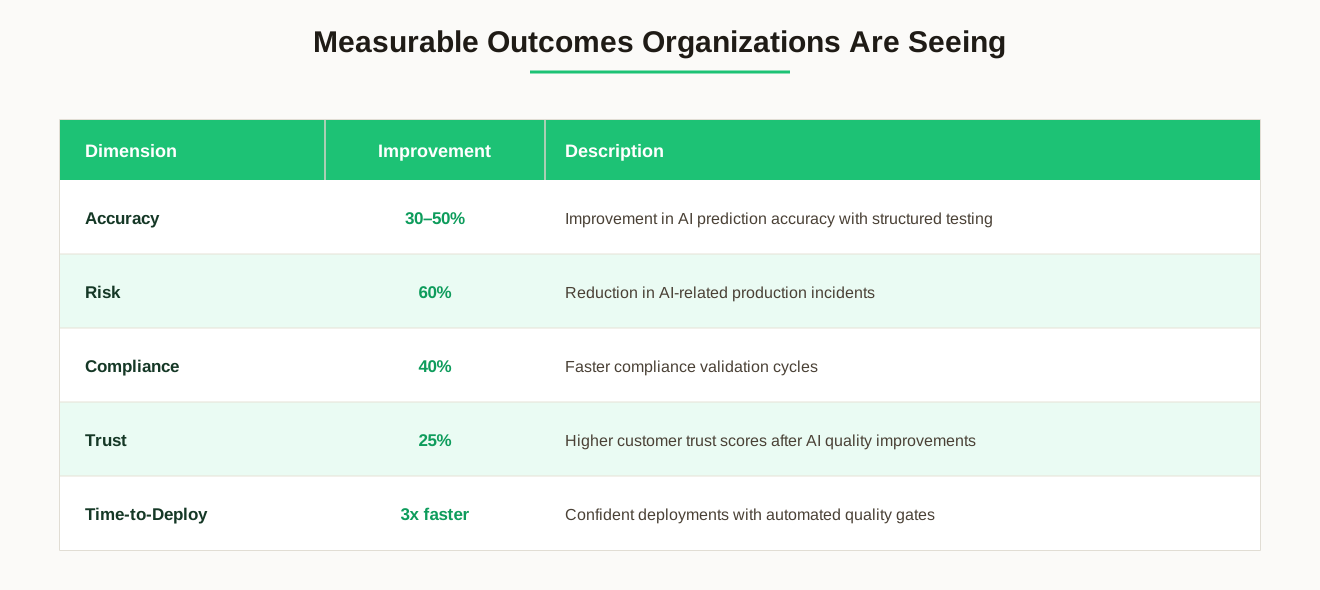
Measurable Outcomes Organizations Are Seeing
A Practical Roadmap to Get Started
Step 1: Identify the Highest-Risk AI Use Case
Start with the AI feature that has the greatest business or customer impact. Not every AI feature needs the same level of scrutiny — prioritize where failure costs the most.
Step 2: Establish Baseline Metrics
Measure current accuracy, response quality, failure rates, and user satisfaction before changing anything. You cannot improve what you do not measure.
Step 3: Build Automated AI Test Suites
Include functional, accuracy, fairness, robustness, and safety checks. Design tests around properties rather than exact outputs.
Step 4: Integrate into CI/CD
Run AI validation on every model update and every prompt change. Automate what you can, flag what you cannot.
Step 5: Monitor in Production
Continuously track drift, failures, anomalies, and user feedback. Production is where AI quality is truly measured — not in the lab.
Step 6: Iterate and Improve
Treat every production failure as training data for better guardrails. Build feedback loops that make the system stronger over time.
Real Industry Case Studies
1. Banking Chatbot: AI chatbots are tested for intent recognition, secure handling of customer data, accurate responses, and safe escalation to human agents. Testing focuses on hallucination prevention, regulatory compliance, and consistent customer experience.
2. Insurance Claim Processing: AI models that process claims must be validated for document extraction accuracy, fraud detection, fairness, and workflow reliability. Testers verify that claims are processed correctly without introducing bias or incorrect approvals.
3. Medical Diagnosis Assistant: AI-assisted diagnosis systems require rigorous validation of prediction accuracy, confidence thresholds, explainability, and human-in-the-loop review to ensure patient safety and regulatory compliance.
AI Testing Lifecycle

The AI testing lifecycle begins with requirement analysis and risk assessment, followed by data and model validation. Functional, accuracy, fairness, robustness, and security testing are then performed before deployment. Continuous monitoring, defect analysis, and model improvement ensure long-term AI reliability.
AI Defect Flow

AI defects should follow a structured lifecycle: detect the issue, log and classify it, perform root-cause analysis (data, model, prompt, or application), implement fixes, re-test, and continuously monitor production performance to prevent recurrence.
Conclusion
As AI becomes embedded in business-critical workflows, trust becomes the new quality metric. Organizations that test AI applications rigorously will deploy faster, reduce risk, satisfy regulators, and build stronger customer confidence.
The organizations that will lead in the AI era are not necessarily those with the most sophisticated models — they are the ones that rigorously validate, monitor, and improve their AI systems in production.
These practices also support broader Responsible AI initiatives by ensuring AI systems remain transparent, accountable, and aligned with organizational and regulatory expectations.
The question is no longer whether to test AI differently. The question is how quickly your organization can build an AI testing capability that keeps pace with intelligent systems.
At InspironLabs, we believe successful enterprise AI adoption depends on engineering trustworthy systems—not simply deploying intelligent models. Effective AI quality assurance combines rigorous testing, continuous evaluation, governance, and human oversight to help organizations build AI solutions that remain reliable, secure, and scalable in production. As enterprise AI continues to evolve, testing must become an integral part of every AI development lifecycle rather than an afterthought.
Ready to Build Trust in Your AI Systems?
Explore how modern AI testing frameworks, AI model evaluation strategies, and governance best practices help organizations build reliable, secure, and trustworthy AI applications across healthcare, financial services, SaaS, and enterprise platforms. Learn how a structured enterprise AI testing approach enables faster adoption while reducing operational and compliance risks.
Whether you’re modernizing existing AI solutions or building new AI-powered products, establishing a robust testing strategy is essential for long-term success.
Explore Our AI Testing & Quality Engineering Services